
Amyloid PET Scan (18F-Florbetaben PET)
Amyloid PET Scan (18F-Florbetaben PET)
What is an Amyloid PET scan?
An Amyloid PET scan is a specialised imaging examination used to detect the presence of beta-amyloid plaques in the brain. Beta-amyloid is a protein that can accumulate abnormally within the brain and is one of the hallmark features associated with Alzheimer's disease.
The scan uses a small amount of radioactive tracer called 18F-Florbetaben (FBB), which binds to amyloid plaques within the brain. A PET scanner then creates detailed images that allow our doctors to assess whether significant amyloid plaque deposition is present.
An Amyloid PET scan does not diagnose Alzheimer's disease on its own, but it can provide important information to assist your specialist in determining the cause of memory or cognitive symptoms.
One of the hallmark pathological features of Alzheimer's disease is the accumulation of beta-amyloid protein within the brain, forming amyloid plaques. These plaques are associated with neurodegeneration, synaptic dysfunction and cognitive decline.
Blood biomarker testing may provide evidence of Alzheimer's disease-related pathological changes and can help identify patients who may benefit from further evaluation. However, imaging and other investigations may still be required to confirm the presence of amyloid pathology1.
Alzheimer's disease-related biological changes may occur many years before symptoms become apparent. Early identification of amyloid pathology may assist specialists in diagnosis, management and treatment planning2
Who should I refer for this Scan?
Patients with objectively confirmed cognitive impairment where Alzheimer's disease is being considered and diagnostic uncertainty remains following specialist assessment. Examples include:
- Mild cognitive impairment (MCI) with suspected Alzheimer's disease.
- Atypical or mixed presentations of dementia.
- Early-onset cognitive decline.
- Patients being evaluated for anti-amyloid therapies
Why should I refer for this Scan?
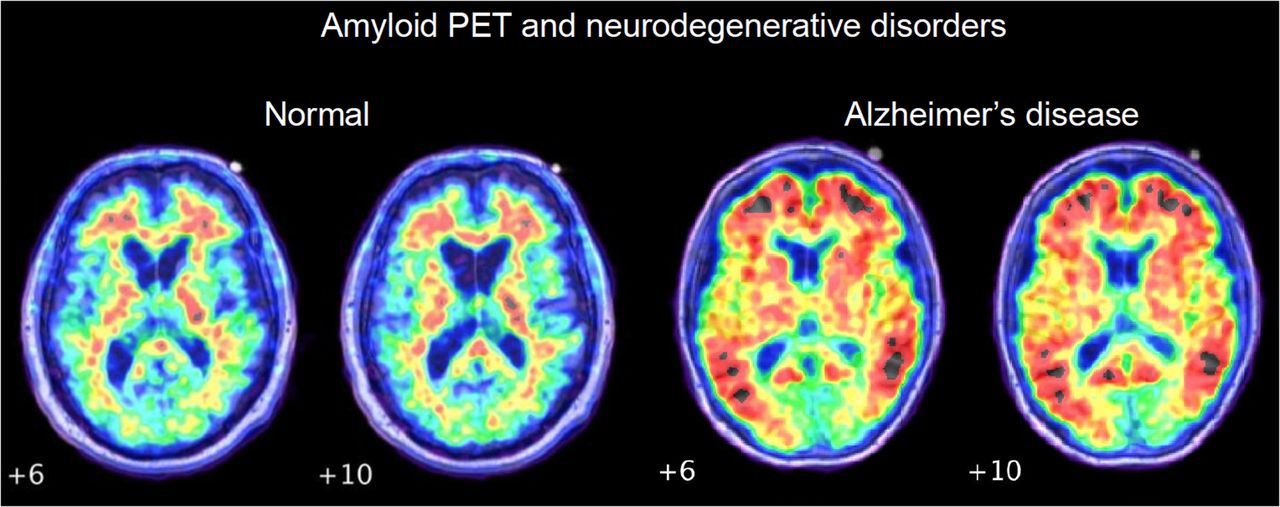
- A negative amyloid PET scan indicates sparse or absent neuritic amyloid plaques and makes Alzheimer's disease pathology less likely as the cause of cognitive symptoms.
- A positive amyloid PET scan indicates moderate to frequent neuritic amyloid plaques are present in the brain. This finding supports the presence of Alzheimer's disease pathology but must be interpreted in conjunction with clinical assessment and other investigations.
What Outcomes can I expect?
- Amyloid PET findings may improve diagnostic confidence and influence patient management.
- The results of an amyloid PET assist with diagnosis and some clinical trial or TGA-approved treatment options in Alzheimer’s disease. Or Results may assist in determining eligibility for TGA approved anti-amyloid therapies (and clinical trials).
- The scan is also essential for monitoring response to amyloid lowering therapies.
The below image demonstrates a negative amyloid PET (left), a mildly positive (middle), and a severely positive scan (right).
Amyloid PET is available at selected I-MED clinics.
Image Source: Marianne Chapleau et al. The Role of Amyloid PET in Imaging Neurodegenerative Disorders: A ReviewJ Nucl Med 2022;63:13S-19S
1 ALZPro: Appropriate Use Criteria for Amyloid and Tau PET Imaging
2 Johnson, Minoshima et al., Appropriate Use Criteria for Amyloid PET (2013)