
New Imaging Tracer Shows Promise for Better Pancreatic Cancer Detection and Staging
New Imaging Tracer Shows Promise for Better Pancreatic Cancer Detection and Staging
Brisbane researchers have trialled a new PET imaging tracer that could help improve the detection, staging and restaging of pancreatic cancer, one of Australia's lowest-survival cancers.
Pancreatic cancer has a five-year survival rate of just 14 per cent, and more than 4,000 deaths from the disease were estimated to occur in Australia in 2025 [1]. Late diagnosis and difficulties in accurately staging the disease remain major barriers to effective treatment.
Imaging tracers, also known as radiotracers, are substances given before a PET scan that help show how tissues and organs are functioning within the body. Different tissues and biological processes can result in different patterns of tracer uptake, which can be detected on PET scans to provide detailed information about how the body is functioning. Gallium-68 fibroblast activation protein inhibitor (68Ga-FAPI) is an emerging imaging tracer that targets fibroblast activation protein (FAP), which is highly expressed within the supportive tissue surrounding many cancers. Emerging evidence suggests that it may be superior to fluorine-18 fluorodeoxyglucose (18F-FDG), the current standard imaging tracer used for the staging and restaging of many cancers.
A pilot study funded by Wesley Research Institute and lead by Associate Professor David Wong at the I-MED Radiology Network within The Wesley Hospital has found that the emerging imaging tracer, 68Ga-FAPI, may outperform the current standard tracer, 18F-FDG, in visualising pancreatic tumours and their spread.
In this pilot study, ten patients (seven men and three women, average age 68 years) with suspected or confirmed pancreatic cancer underwent both 68Ga-FAPI PET/CT and 18F-FDG PET/CT scans. 68Ga-FAPI PET/CT showed higher uptake values (SUVmax) in both primary tumours and metastatic sites compared with 18F-FDG, suggesting it could provide clearer images and more accurate staging. It also identified additional lesions in three participants that were not detected on 18F-FDG PET/CT. Clinicians reviewing the scans considered 68Ga-FAPI more diagnostically useful in five participants and equally useful in the remainder, based on lesion detection, tumour delineation and staging impact. No adverse events were reported.
The findings published recently in the Journal of Medical Imaging and Radiation Oncology, indicate that the new imaging tracer could help clinicians better determine which patients might benefit from surgery versus other treatments [2].
The study highlights the strength of multidisciplinary collaboration and brought together the Nuclear Medicine Research Team (A/Prof David Wong, Nicola Evans, Ebony Perkins, Sepinoud Firouzmand, Tiffany Black and Yvette Coulon) and The Wesley Hospital's hepatopancreatobiliary (HPB) surgical team (Associate Professor David Cavallucci and Associate Professor Nicholas O'Rourke).
“This study provides important proof-of-principle that 68Ga-FAPI PET/CT could become a valuable clinical tool in pancreatic cancer imaging,” said Associate Professor Wong.
“If validated in larger studies, the technology could improve outcomes for hundreds of Australians diagnosed with pancreatic cancer each year by enabling earlier and more precise intervention.”
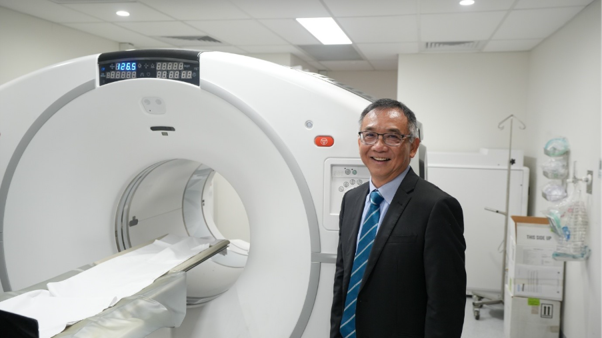
Pictured: A/Prof David Wong.
While the study was small, the findings support further research into the potential role of 68Ga-FAPI PET/CT in pancreatic cancer. This imaging technique is still being investigated, and further studies are needed to better understand its potential clinical applications. The research team is now planning larger studies involving more patients to further evaluate the role of 68Ga-FAPI PET/CT in pancreatic cancer and explore its potential applications in other cancers.
Since this project, the Nuclear Medicine Research Team has continued to grow, with Dr Louise McEwan, Chelsie Orchard, Mitchell Thomson and Matilda McEwan joining the team’s research activities. Together, and in collaboration with referring clinicians, the team is working on a range of new and ongoing research projects that help drive innovation in the diagnosis and management of a wide variety of diseases.
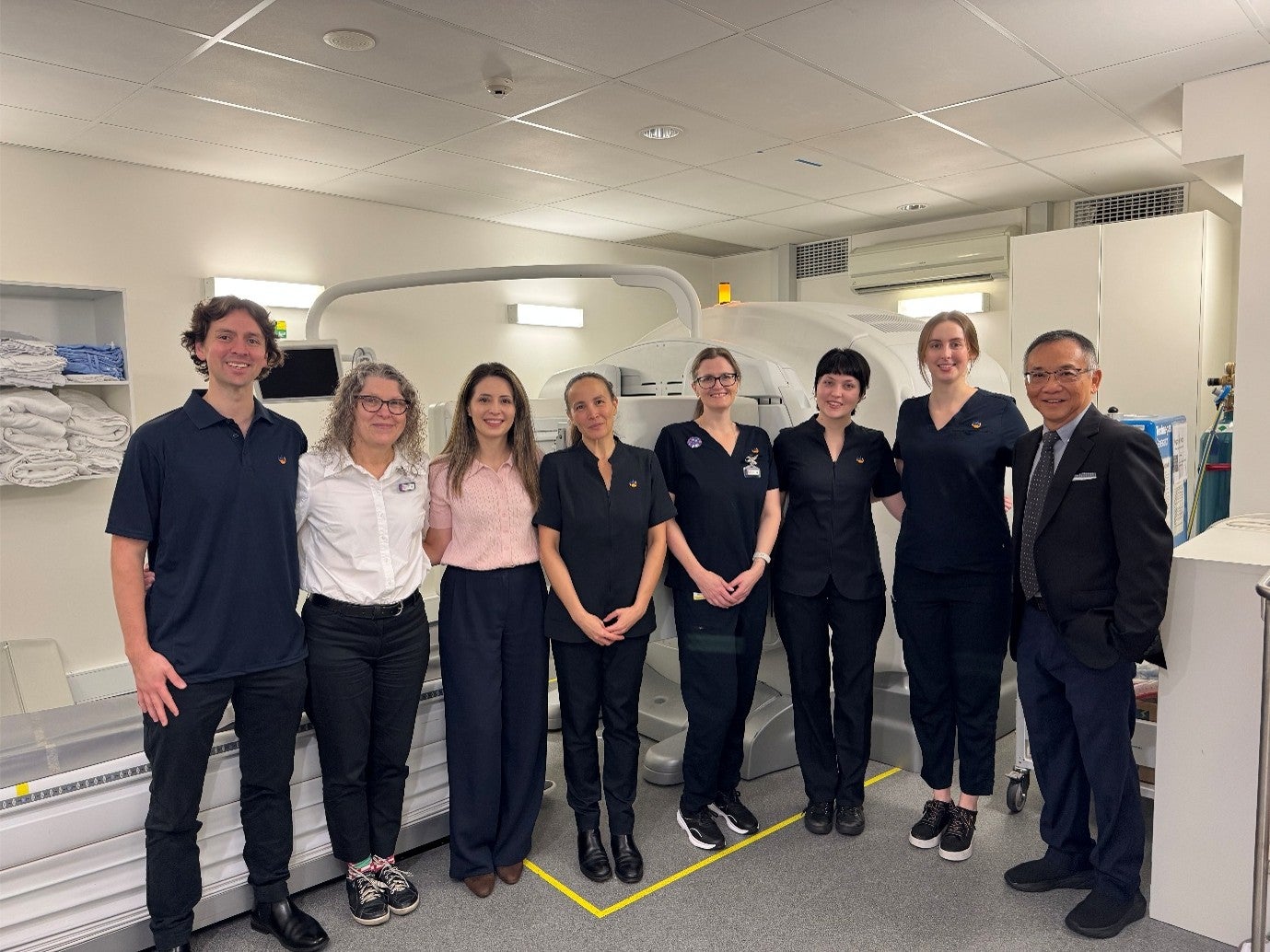
Pictured from left to right: Mr Mitchell Thomson, Dr Louise McEwan, Dr Sepinoud Firouzmand, Ms Tiffany Black, Ms Yvette Coulon, Ms Matilda McEwan, Ms Chelsie Orchard and A/Prof David Wong.
The project was supported by the Wesley Research Institute’s Grant Rounds program, which funds innovative clinician-led research across UnitingCare hospitals.
References:
1. Cancer Australia. Pancreatic cancer in Australia statistics. Available at: https://www.canceraustralia.gov.au/cancer-types/pancreatic-cancer/pancreatic-cancer-australia-statistics (accessed May 2026).
2. Evans N, Perkins E, Firouzmand S, Black T, Coulon Y, Cavallucci D, O'Rourke N, Wong D. 68Ga-FAPI-46 PET/CT Versus 18F-FDG PET/CT for Pancreatic Cancer: A Feasibility Study. J Med Imaging Radiat Oncol. 2026 May 25. doi: 10.1111/1754-9485.70124. Epub ahead of print. PMID: 42186148.